recognizing the importance of the human-animal bond in recovery from addiction
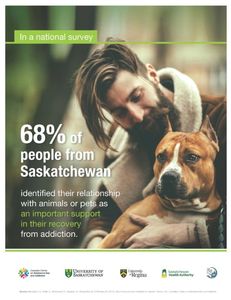
Research shows that the human-animal bond is an important part of family circles, and that the reciprocal relationship people have with companion animals in their lives can be a great source of support and strength, including when facing substance use challenges.
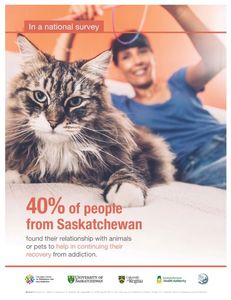
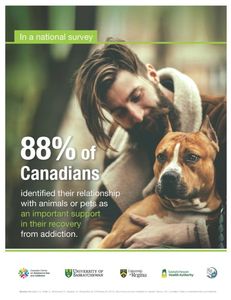
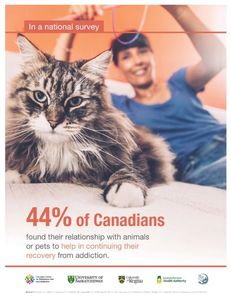
According to a national survey conducted by the Canadian Centre on Substance Use and Addiction, supported by the PAWSitive Connections Lab, these collaboratively designed posters share some of the results.
Saskatchewan Specific Recovery Posters
Saskatchewan Specific Recovery Posters
Saskatchewan Specific Recovery Posters
Saskatchewan Specific Recovery Posters
Saskatchewan Specific Recovery Posters
Canada Wide Recovery Posters
Canada Wide Recovery Posters
Canada Wide Recovery Posters
Canada Wide Recovery Posters
Canada Wide Recovery Posters

making rental housing pet friendly
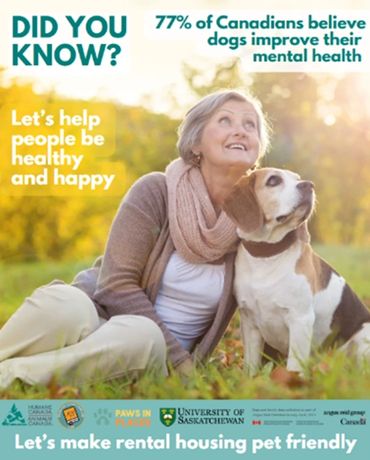
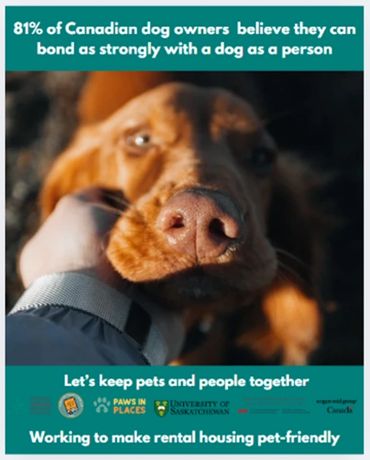
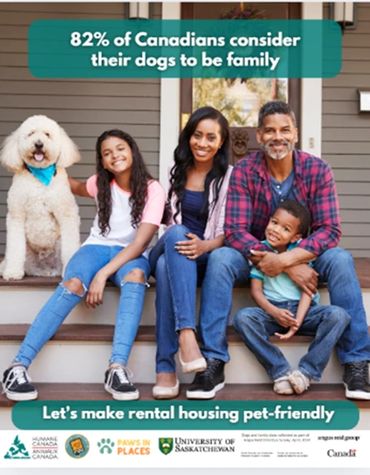
Research indicates that companion animals are more like family to a growing number of Canadians.
According to a recent national survey conducted by researchers at the University of Saskatchewan in partnership with Paws in Places, the PAWSitive Connections Lab, and Angus Reid Group, these posters collaboratively designed with Humane Canada share what the latest research tells us!
Yet many property owners, managers and rental associations do not allow pets – especially dogs – in their units or facilities.
Let's make rental housing pet friendly!